
Relationship Between Intuition and Self-esteem

Last month we explored how you can enhance and honour your intuition. This month we expand the theme by looking at the relationship between intuition and self-esteem and also how to tell fear from intuition.

As you sharpen your intuition you are more able to tap into your higher guidance and follow your path and purpose. 

What is Intuition? 

Intuition is your inner-knowing – that gut-feel that guides you on your path and in your decision-making. Intuition allows us to take action on our gut-feelings. If we lack sufficient self-belief, we don’t always trust that gut-feel and can dismiss it all too soon. We also don’t always know how to distinguish that trusted protective inner voice from fear. 

What is it not? 

Intuition is not a prophetic ability to tell the future. It is not fear.

Relationship between intuition and self-esteem

We are all intuitive. We need to cultivate the self-esteem necessary to follow through on that gut-feeling, says Caroline Myss in The Anatomy of Spirit (1996). The gut-feeling is directing us to take action. The more we listen to our inner intuitive voice, the stronger it grows. If we ignore it once too often it tends to give up and disappear in the background.

Honouring oneself is about following our own inner-guidance despite all the opinions and advice out there. You have a unique path and only you can live your unique mission. Being your unique self, implies valuing and respecting your inner guidance, knowing it’s right and true for you.

Relationship between intuition and emotions

Intuition is not an emotion as we know it. Your emotions do however serve as a gateway to your intuitive self, and by honouring and valuing your feelings you can access and sensitise your intuition. The more you attend to your emotions as subtle messages, the stronger your intuitive ability grows. This way you become more in touch with you inner-guidance and that is a priceless gift.

How do we tell Fear from Intuition?

Signs of a Reliable Intuition

  • Conveys information neutrally, unemotionally
  • Feels right in your gut
  • Has a compassionate, affirming tone
  • Gives crisp, clear impressions that are “seen” first, then felt
  • Conveys a detached sensation, like you’re in a theatre or watching a film. 

Signs of an Irrational Fear

  • Is highly emotionally charged
  • Has cruel, demeaning or delusional content
  • Conveys no gut-centred confirmation or on-target feeling
  • Reflects past psychological wounds
  • Diminishes centredness and perspective.

Sense it Inside You 

So, how do we tell the difference between irrational fear and protective intuition? Begin to value the messages that come from inside. Learn where these messages originate in the body and how fear and intuition feel different inside. Take stock of what triggers fear in you and distinguish irrational fears from guiding intuition. Begin to heed your intuition by taking the right action. Train yourself to question fears tied to low self-esteem; we’re all worthy of the extraordinary. For example, it’s right to question the fear to love again after you have been hurt. We can always heal the past and open our hearts again. True intuition will never put you down or support restrictive attitudes or behaviour.

Another way of telling fear and intuition apart is to question whether what you are feeling feels empowering or debilitating. 

Intuition comes from your spirit, your heart, your authentic self, and always has a positive intent. Fear comes from ego; from your personality and is self-created illusion. Listening and following the guidance of your inner-voice will open you up to amazing co-incidences or synchronicity, bringing a touch of magic to your life. 

Develop intuition and symbolic sight

This is where self-esteem comes in. We are all intuitive. We need to cultivate the self-esteem necessary to follow through on that gut-feeling. The gut-feeling is directing us to take action. Low self-esteem and fear of failure prevent us from acting on our intuition. Intuition can be very helpful if only we have the personal power and courage to follow through on the guidance that it provides. How often do we doubt that first notion only to embark on a process of reasoning which overrides the intuition? Then regret comes in its familiar ‘if only I listened to that first notion…’.

Low self-esteem reflects a lack of faith in oneself and in the powers of the subtle unseen world. Consequently, we don’t value our intuition or gut-feeling. To develop intuitive skills, we therefore need to cultivate self-esteem first.

What is self-esteem and how can we cultivate it?

How we feel about ourselves determines our quality of life and our success. No one is born with healthy self-esteem; we earn this quality as we face challenges in life. This is how we build self-confidence. We overcome limitations by facing fears of the unknown and taking risks.

Low self-esteem means the fear of failure is too intense and debilitating. The issue of self-understanding and acceptance is not only the most important step in self-development; it is also the most crucial step in our process of spiritual growth.

Building self-esteem is developing and heeding intuition and is spirit-enhancing. Intuition provides guidance yet does not guarantee safety. There is an aspect of faith built into it. The location of power and control is within us, not in anyone else or anything out there. Becoming self-reliant is key to healthy self-esteem. Self-esteem is about honouring oneself and heeding that inner-voice. Self-belief is essential for inner-healing. Like intuition, it also implies belief in the subtle unseen world.

Dr Caroline Myss identifies four stages of personal power and self-esteem:

  • Revolution – separating ourselves from group/tribal thought
  • Involution – self-awareness/self-knowledge that leads to choice and action
  • Essential healthy self-love – recreating ourselves, a new image, being who we are
  • Evolution – spiritual reflection, development and growth.

What’s the difference between self-esteem and self-image?

Self-esteem is your opinion of yourself; whether you like yourself; what you think of yourself; how you feel about yourself; self-respect.

Self-image is what you think other people think of you; which in turn, is based on what you think of yourself.

I often discuss with clients the practice of self-love. The concept can cause people to feel very uncomfortable, but how can we love and respect others if we cannot do that for ourselves? How can we care for others, if we don’t care sufficiently for ourselves? Honouring yourself implies putting yourself first. This is important if you want to be of greater service to others. Honouring oneself is also about following your own inner guidance despite opinions and advice from others, knowing what’s right and true for you.

Resources
Courses
Join our next meditation course starting September and master your inner world and higher perception. All details are on the Events Calendar,  click through to book your space now.
Learn Reiki
Reiki is a very simple and practical self-healing tool that you can use for physical, emotional and mental healing. Read more on Reiki and see the Events Calendar for courses.
Time Line Therapy™
Sometimes we can do with assistance to build self-esteem, self-belief and self-confidence. Time Line Therapy™ is highly effective in getting to the root cause of our issues. Once we’ve found the root cause, deep-seated hurt, fears and doubts can release for good. Time Line Therapy™ is unique in its approach to emotional healing and resolves issues remarkably fast without having to go into too much detail. Time Line Therapy™ is equally effective in overcoming limiting beliefs and building empowering beliefs and confidence. For a detailed description just click through to Time Line Therapy™ on the website.

Books

My first therapy bible The Anatomy of Spirit by Carolyne Myss 
Still reduced to 99p on Amazon for Kindle: Lifting the Veils of Illusion, 7 Steps to Spiritual Enlightenment
Deepen into self-mastery with The Foundations of Mastery, 12 Steps to a Fulfilled Life.

Cosmic Overview and Current Energies

We’re birthing a new paradigm. Get a feel for the current climate energetically so you can flow with life, take a higher perspective and see things clearly. August is a particularly powerful month. Maximise the 8/8 Lion’s Gateway coinciding with the Leo New Moon … Read more for the bigger picture.

Newsletter

Sign up for our monthly newsletter and receive a wealth of self-help resources, tips and information on mental, emotional and physical well-being. Sign up for the monthly newsletter here to stay updated.
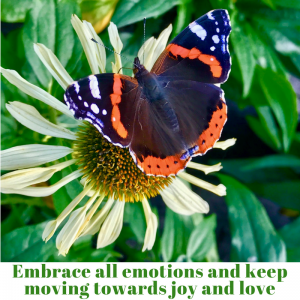
11 Mysterious Facts About Your Emotions

We live in a society that values intellect over emotions. Our upbringing and education tells us how to think and how to be successful, but hardly ever how to deal with emotions. Furthermore we tend to approach our health more on a physical and scientific level. We may visit the doctor, the dentist and the gym and may have certain dietary-related practices to ensure good physical health, but what do we do to invest in our emotional and mental health? I’m a great believer in the mind-body link.

A healthy mind develops a healthy body. The mind can be a mystery and emotions can be bizarre, so here I share 11 mysterious facts about the nature and functions of your emotions:

It’s real
Accept what you feel as real. Your feelings are more real than your thoughts. They rise from a place of your authentic self. You are human after all, so tune into your feelings. The knowing and accepting of the feeling is the seed of healing. Give yourself permission to feel your feelings. Avoiding your feelings means you are ignoring a call from your deeper unconscious. This can result in suppression of emotions. Suppression will just cause emotions to linger and grow stronger. Eventually unhealed emotions impact on your physical health. There is a researched link between suppressed emotions and cancer. There is also a link between anger and high blood pressure and between heart disease and hostility or cynicism. (Hanson 2009  and  Edwards 2010)

It’s all linked
Emotions are stored like clusters of similar types (e.g. anger or fear) in the unconscious mind, which is why they tend to accumulate and grow stronger. The bag gets full. When you experience a new event causing you fear, it brings up all past fears because the mind associates the new event with past experiences of the same emotion. In therapy, we always look for the root cause; the start of the cluster. That way, we can get to the bottom of it and release the entire cluster. The result is like a good cleanse, the bag gets emptied and you feel much lighter, at peace and you can move ahead.

It’s unconscious
The unconscious mind represses memories with unresolved negative emotions. These could be emotionally traumatic events. It does this for your own protection; to help you get through your day or get on with life.

Often in discussion about past events, clients will say to me: Oh I’ve dealt with that. It doesn’t bother me anymore. They think they’ve dealt with it, instead they’ve packed it away. Stored emotions are chemicals in the cells and can create physical discomfort and health conditions over time. Stress hormones are an example familiar to most of us.

It’s irrational
Your emotional unconscious mind works radically different from your logical rational mind. There’s nothing rational about emotions. It’s completely irrational. It’s still real though. Phobias are classic examples. People with phobias like fears of open spaces, public speaking, failure, buttons, birds, and the like, say they know it’s irrational and yet they still feel it.

Your unconscious mind, being irrational, may pick strange moments to bring up repressed memories for emotional healing and releasing. It gauges, in its own irrational way, that you are ready to face the feelings and deal with it.

It’s like water
E-motion is energy in motion. Emote means to flow through and out. Healthy emotions have the same fluidity as water. Emotions need to flow through you, and expression is a way of doing it. From a therapeutic perspective, emotions aren’t a problem unless they are unresolved, accumulated or suppressed. Saying how you feel can educate those around you and they can get to know you better.

It’s a coded language
As with pain in the body, our emotions are actually messages from the unconscious mind. These aren’t always immediately obvious, yet there’s a lot to learn from it. Anger for example, can mean that someone may have overstepped a line and that it may be time to re-assert your boundaries. Anxiety tells us that the mind is focusing on what we don’t want to happen, rather than what we do want. What we focus on grows, so ironically, when we focus on a potential negative outcome, we energise and grow the possibility of the very thing we don’t want to happen. Sadness and depression can be the result of unexpressed anger, now turned inward. If this continues over a prolonged period, it can impact on the body physically. Reflection brings clarity in the murky waters of the unconscious mind. Then wisdom can shine through.

It’s your friend
Ultimately, your emotions serve as a gateway to your intuitive self and by befriending your emotions, honouring and valuing them, you can access your own inner wisdom. The more you attend to your emotions as subtle messages, the stronger your intuitive ability grows. This way you are more in touch with your inner guidance and that is a priceless gift.

It’s contagious
Emotions are contagious and tend to rub off. Your unconscious mind; your emotional mind is very sensitive and picks up very easily on the subtleties of feelings of the people around you. In fact, it doesn’t really distinguish between your feelings and mine. It all becomes intertwined and connected as one, because at the level of the unconscious mind, we are one. So we can be dragged down or uplifted. Equally, we can have a dulling or uplifting effect on others. Being aware of it gives us choices.

It’s has vibrations
We have all walked into a room and sensed the vibes. You can feel the tension or the lightness. Emotions have vibrations. Some, like stress and fear, are dense and low in vibration. Others, like love and joy, are light and high in vibrations. Higher vibrations are naturally more uplifting and expansive.

It’s a human experience
It is natural and human to experience the whole range of emotions. One day you may feel optimistic and positive, and then comes a day when you feel low for no apparent reason. Be willing to experience the whole range of human emotions. Don’t resist lower emotions of anger, sadness, fear, hurt or guilt. What you resist persists. You don’t have to dwell in the lower emotions. Here we may experience blame or resistance or force or struggle against the flow of life. Flow through the experience with awareness and intention to move back up into positive emotions. Releasing resistance and taking responsibility, begin to tip us into positive emotions. Practicing acceptance, gratitude and forgiveness helps us to transcend the ego and become more of our true higher selves. Clarity brings wisdom and previously evasive emotions of unconditional love, joy and peace are experienced again as our true natural state. Youthfulness and good health – also our natural state – returns.

It’s an indicator of consciousness
Emotional levels are levels of consciousness. Where you dwell in emotions, you dwell in consciousness. Consciousness controls the health in your body.

If you dwell in lower emotions too long, you can experience apathy and your energy becomes more contracted and solid. You can’t make decisions because you resist change. You want things to stay the same. You are motivated by safety and security. Stress and fear makes you ill.

Higher up in positive emotions of willingness, gratitude, excitement and enthusiasm, there’s more movement and flow in energy. You become more expansive and you have more space to create. You are driven by meaning and purpose. You feel energised and healthy. You come into your own power, and abundance is a natural outflow. More on this link between emotions, health and consciousness in our next blog.

What can you do about it?
Time Line Therapy™, facilitates gentle, yet powerful processes to enable you to heal emotions of the past. Emotions of anger, sadness, fear, hurt and guilt keep us attached to the past and as we heal these emotions, we set ourselves free from the past; free to create a new magnificent life.

I can highly recommend Time Line Therapy™ for a complete clear-out of negative emotions and limiting beliefs. It’s transformational and rapidly speeds up your personal evolution. As a great self-help tool, you can listen to a Mindfulness Healing Meditation listed under our Products page. It is an inner journey that you can make for your own emotional healing as often as you want to release emotions and achieve lightness.

Join our next Lightworker Activation Course to experience deep healing. This course takes you on an in-depth journey through the chakras – the energy centres of the body. Old patterns of fear, pain, self-doubt and negative thought forms are released. As the darkness goes, the light can set in. New positive thought forms are adopted and resources are activated that’s been lying latent inside of you all along. A unique and exciting experience – participants blossom as they open up to their higher abilities and energy sensitivity. This course starts on 12th September – book now to ensure your space. All details are on our Events Calendar.

Join our next Meditation Course in Lancaster. We lift the veils of illusion, take a peek into the unseen, share ancient wisdom and consult ground-breaking science, enabling you to see the world in a whole new way. You will grow in clarity and transform as a person. Again, all details are on the Events Calendar.