

 What if one of the most powerful antidotes to stress, anxiety, and low mood was already hiding in your morning cup of coffee?
Something extraordinary happened in a psychology study at the University of Toronto. Researchers asked people to log their daily moments of awe — and one participant reported far more than anyone else. When psychologist Dr. Jennifer Stellar went looking for the explanation, she found it in the most ordinary of places: someone standing in their kitchen, watching milk swirl slowly through their morning coffee. Every single day, they stopped for a moment and simply watched. That was their moment of awe.
That image has stayed with me. Because so many of us — especially when we’re anxious, overwhelmed or moving through a period of low mood — are rushing past those moments without even noticing them. We’re chugging the coffee, scanning the phone, mentally running through everything we haven’t done yet. And in doing so, we’re bypassing one of the most accessible and genuinely powerful resources for our wellbeing that exists. So let’s talk about awe. What it actually is, what the research tells us, and — most importantly — how to bring more of it into your everyday life, even on the challenging days.
What is Awe, Exactly?
Awe is one of those emotions that’s hard to define but instantly recognisable when you feel it. It’s that moment when something stops you — something vast, beautiful, or beyond your usual frame of reference — and for a second, you’re completely present. Your eyes widen. Your breath slows. You feel something that’s bigger than your current worries. Dr. Dacher Keltner, psychologist and author of Awe: The New Science of Everyday Wonder, describes it as what happens when we encounter things that are “vast and beyond our frame of reference.” He’s identified a whole landscape of reliable sources: nature, music, art, acts of extraordinary kindness, the birth of a baby, spiritual experience, even watching a great athlete do something seemingly impossible.But here’s what I find so encouraging — and what my own research confirms too — awe doesn’t require anything grand. It can live in the geometry of a snowflake. A bee on a flower. The colour of autumn leaves. A piece of music that raises the hairs on your arms. The night sky. A child’s absolute delight in a puddle.
“Awe is, in some sense, what’s sublime about life. I don’t think there’s anything you can do that’s better for you than a few minutes of awe.” — Dr. Dacher Keltner, UC Berkeley
What Awe does to the Mind
Published research brings together a compelling picture of what awe actually does to the mind and body. And the findings are remarkable. Just a few minutes of awe and wonder per day is linked to:
- Stress, anxiety & depression reduced
- Loneliness & inflammation lowered
- Generosity, compassion & connection increased
Participants were asked to take a 15-minute “awe walk” once a week for eight weeks. The instructions were beautifully simple: look at the world with fresh eyes, pay attention to the details, engage your senses. Walk wherever you like — city, countryside, suburb. The route doesn’t matter. The mindset does. The results were significant improvements in mood and emotional wellbeing.
The findings mirror what my own MSc research found too. In my Positive Psychology dissertation, participants in a mindfulness-enhanced nature connection study described almost immediate mood shifts on stepping into nature mindfully — a sense of spaciousness, calm, and perspective that allowed concerns to simply dissolve. You can read more about what we discovered here.
Why Awe Works: the “small self” effect
One of the most fascinating explanations for awe’s healing power is what researchers call the “small self.” When we experience awe, we momentarily think less about ourselves. That is actually one of the most relieving experiences available to the human mind — especially for those of us who experience with anxiety or low mood, and overthinking.
Researchers describe it as a release from “that noisy ego that’s always in your head, talking about stuff and generally not saying the nicest things.” Awe shifts our attention outward, toward something larger than our current problems. Unlike shame — which can also make us feel small but traps us in painful self-focus — awe expands us. It connects us.
Because we feel both small and connected to something larger, we naturally begin to prioritise the needs and feelings of others too. Awe generates what researchers call “self-transcendent” emotions — compassion, gratitude, generosity, a felt sense of belonging to something beyond our individual story.
From a spiritual perspective, this makes beautiful sense. It’s the experience of the ego stepping aside and the higher self stepping in. The small, contracted self gives way to something more expansive, more connected, more aligned with who we truly are. Ancient wisdom traditions have always known this. Science is now confirming it.
Positive Psychology
In my MSc Positive Psychology study, the participants who engaged in mindfulness-enhanced nature connection described something that lines up almost perfectly with this research. Being in nature gave them a sense of the bigger picture — of cycles, seasons, of something solid and reliable existing beyond their current circumstances. One of the key themes that emerged was a felt sense of awe at nature’s wisdom: how things grow, how they self-maintain, how they flourish seemingly effortlessly.
Participants described a shift in perspective that allowed worries to dissolve, a feeling of being part of something larger, and what I can only describe as a re-membering — a coming back to themselves, to meaning, to connection. Several noticed what felt like synchronicities, messages in nature, a sense of being held by something beyond their ordinary awareness. The boundaries between the personal and the vast began to soften.
Existing research supports this: awe has been shown to be a self-transcending emotion that expands wellbeing, diminishes the ego-driven narrative and its associated negative emotions, whilst fostering a deeper sense of connectedness and meaning in life.
Awe as a Reset Button
Research suggests seeking out moments of awe can be especially helpful precisely when you’re stressed or overwhelmed. During the pandemic, Dr. Keltner’s team asked exhausted healthcare workers — many working long shifts in chaotic conditions — to pause and recall something that had made them go “whoa.” Even that brief act helped reduce anxiety and loneliness.
Awe is more than a reward for the good days. It belongs on the challenging days too. It might actually be most powerful exactly when you feel most contracted, most alone with your thoughts, most caught up in a loop of worry.
How to Invite more Awe into your Day
Practical ways to practise awe:
- Go on an awe walk. Go outside and look — at everything. The veins of a leaf. The movement of light through branches. The shape of clouds. Feel the air on your skin.
- Find your own awe triggers. For some people it’s nature. For others, music, art, sport, or witnessing acts of extraordinary human kindness. Ask yourself: what makes me say “wow”? Then deliberately put yourself in the way of more of it.
- Think small. You genuinely don’t need the Alps or a solar eclipse. Watch the milk poured in your coffee. Look up at the sky for three minutes. Really look at something beautiful without your phone in your hand.
- Use screens mindfully. Nature documentaries, extraordinary human achievement, breathtaking footage — these can all induce a genuine awe response. A BBC Earth episode on a low day can shift your whole nervous system.
- Notice moral beauty – in Nature and also in people’s acts of kindness, courage, or grace. Who inspired you today? Let yourself feel it.
Make it a daily practice. As Dr. Stellar puts it, treat awe less like dessert and more like a vegetable. Something nourishing that belongs in every day.
A Gentle Invitation
If you’re moving through anxiety, overwhelm, or a period of low mood right now, know that relief doesn’t always come from going inward and examining the problem. Sometimes it comes from going outward — from allowing something larger than your current experience to catch your attention and gently loosen its grip on you.
Step outside. Look up. Press play on that piece of music that always moves you. Sit mindfully with your morning coffee and actually watch it.
Awe can be experienced anywhere. It’s waiting for you in the ordinary. All you have to do is slow down enough to notice it.
Resources and Products
Visit our Resources Page which offers a comprehensive list of products – meditative and therapeutic tools – that can be accessed for your ongoing self-development process. There’s a section designed to calm anxiety. A recorded hypnosis section is aimed at addressing commonly experienced issues like insomnia, stress, confidence and smoking or vaping cessation. Timeline journeys have also been created for ongoing therapeutic practices. The Resources Page offers a number of products that can be accessed for free and other premium products are available at a small fee. The premium products link through to our brand new Ko-fi Shop which you can access here. We hope that you enjoy these resources and that they aid in your empowerment.
This month we open the doors to our transformative online courses
The Emotional and Energy Reset Course – this one of a kind 4-week online course is custom-designed around what people actually said in our survey that they are experiencing right now. People say they feel exhausted, experience overwhelm, overthinking, anxiety, stress, low mood, feel disconnected, lost and stuck. These feelings are a common phenomenon at the moment and they’re on the increase. This course is aimed at offering gentle yet profound and effective solutions. See full course and booking details here.
Books
Lifting the Veils of Illusion, 7 Steps to Spiritual Enlightenment
The Foundations of Mastery, 12 Steps to a Fulfilled Life
Time Line Therapy™
To achieve lasting healing of negative emotions and limiting beliefs, it’s best to get to the root cause. Time Line Therapy™ is highly effective in uncovering the root cause. Once we’ve found the root cause, deep-seated fears and doubts can release for good. Time Line Therapy™ is unique in its approach to emotional healing and resolves issues remarkably fast without having to go into too much detail. Time Line Therapy™ is equally effective in overcoming limiting beliefs and building empowering beliefs and confidence. For a detailed description visit Time Line Therapy™ on the website.
 Natural Wellness Blog
Our Wellness Blog, is inspired by the concepts of Nature on Prescription and Food on Prescription. This month we explore the mood-lifting effect of soil bacteria, and staying hydrated with seasonal fruit and veg. Access it here now for practical inspiration on pro-active health.
Cosmic Overview and Current Energies
We’re birthing a new era. What does July 2026 hold for you? Get a feel for the current climate energetically so that you can flow with life, take a higher perspective and see things clearly … Read more for the bigger picture.
Newsletter
Sign up for our monthly newsletter and receive a wealth of self-help resources, tips and information on mental, emotional and physical well-being. Sign up for the monthly newsletter here to stay updated.
For all courses, visit the Events Calendar.
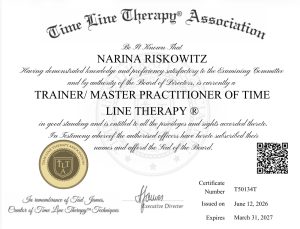 I’ve just renewed my membership with the Timeline Therapy™ Association and realised that this year marks 20 years since I received my very first certification in Timeline Therapy™.
 Over the past two decades, I’ve gone on to complete my Master Practitioner Certification, Trainer Certification, and Trainer of Master Timeline Therapy™ Certification. Throughout my career, Timeline Therapy™ has remained my primary therapeutic modality and one that I continue to value deeply.